Explore Our Learning Materials
Discover a growing collection of practical and inspiring resources on soil, plants, composting, and climate change. Explore hands-on experiments, accessible background information, ready-to-use learning activities, and step-by-step building instructions for greening projects that can be implemented at your school. The materials help you bring environmental topics to life – in the classroom as well as in and around the school building.
Planning to start your own school greening project? Our 7 Steps Towards a Green School guide supports you throughout the entire process – from putting together your team and developing your initial idea to planning, implementation, long-term maintenance, and operation.
Help us make our resources even better by sharing your experience and feedback! It only takes a few minutes.
Use the filters to browse the materials by topic, material type or recommended age group and find the resources that best suit your class, lessons or school project.
-
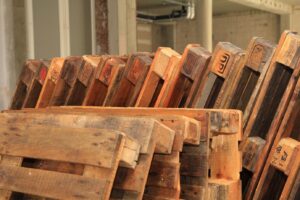
Wood Protection
Wood is a “living” natural product – and therefore also perishable. That is why it is important to prepare the wood well before using it for construction.
-
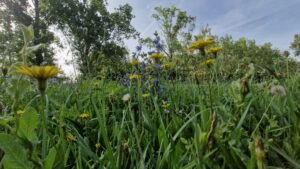
Wildflower Meadow
Creating a wildflower meadow is one of the most rewarding ways to support local biodiversity.
-
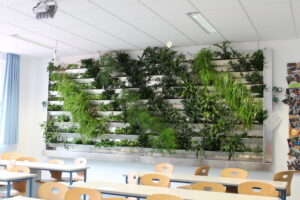
Vertical greening
Vertical greening can be applied indoors and outdoors in a space-saving way. Green facades are an alternative form of greening for densely built-up cities.
-
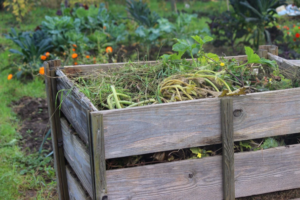
Troubleshooting composting problems
Understanding the common symptoms of composting issues, their possible causes, and practical solutions is key to maintaining a healthy and efficient compost pile.
-
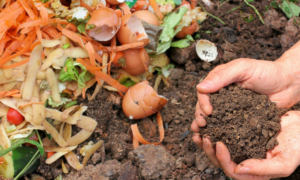
The basics of composting
Composting is the conversion of once-living materials from plants and animals into humus or compost. This is stable organic matter that is dark and crumbly, sweet-smelling, and is a good conditioner and fertiliser for soil.
-
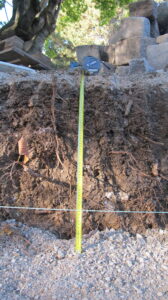
Soil types
The composition of soils is defined by the grain size composition of the mineral soil substance and the associated tactile properties. Depending on the grain size composition, soils can store different amounts of water, have a different nutrient content, are difficult or easy to work and are rooted differently by plants.
-
Soil functions
Soil is one of the most important bases of life for humans, animals, and plants. Without soil, life on earth as we know it could not exist. Soil has a wide variety of functions, such as habitat functions and regulatory functions in the energy, water and material balance, filter, production, and utilisation functions for the…
-
Soil
The term soil refers to the animate outer layer of our earth’s crust. It is an important part of our environment and the basis for life on Earth.
-
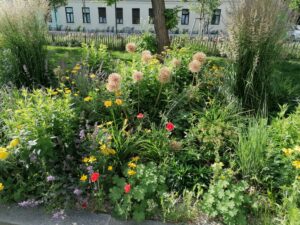
Positive effects of plants
Plants have many positive qualities. Through photosynthesis, plants produce the oxygen that is vital for humans and animals and purify the air as well. For many animals, plants form a space to live – from small animals cavorting in moss to large animals living in the forest.
-
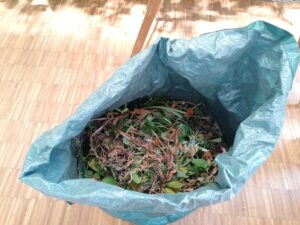
Plant care
In order to thrive and grow optimally, various factors are indispensable for plants. Plant growth factors include light, air, temperature, water, and nutrients. If all factors are sufficiently present, the plant can develop well.
-
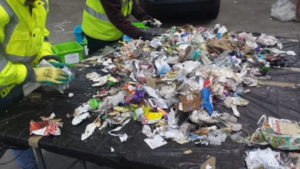
Learning Activity: Waste Characterisation
Waste characterisation involves analysing the types of waste generated in a specific area to understand what is being thrown away and how it can be managed more sustainably.
-
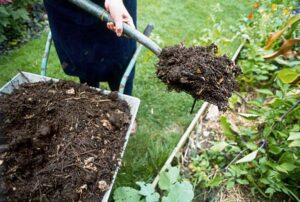
Learning Activity: Using Compost
Where there are plants, there is a need for compost. Compost has so many uses you will never run out of ways to use this black gold!
-
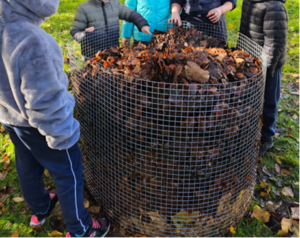
Learning Activity: The Leaf Mould Composting Process
Leaf mould is compost made by allowing autumn leaves to decompose in the presence of air and moisture.
-
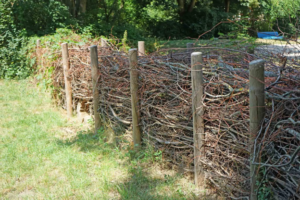
Learning Activity: Rough compost piles and dead hedging
Sometimes you may have large amounts of logs, branches and other bulky woody materials that will not easily compost. A useful and often elegant solution can be a rough compost pile or a dead hedge.
-
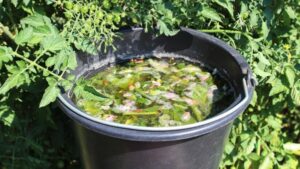
Learning Activity: Making Homemade Liquid Plant Feed
Liquid plant feed is an organic fertiliser made by soaking nutrient-rich plants in water to release their minerals and nutrients.
-
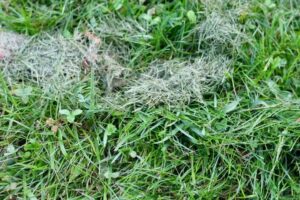
Learning Activity: Grasscycling
Grasscycling is the natural recycling of grass by leaving grass clippings on the lawn when mowing.
-
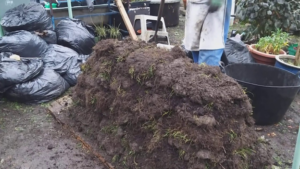
Learning Activity: Grass sod pile composting
Sometimes you may need to remove grass sods grass with roots and attached soil when creating a wildflower meadow or carrying out other landscaping projects.
-
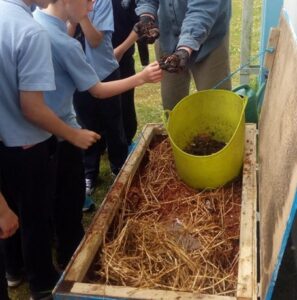
Learning Activity: Creating and Managing a Wormery
Creating and managing a wormery is an efficient method of turning kitchen waste and small amounts of garden waste into nutrient-rich compost and a concentrated liquid fertiliser.
-
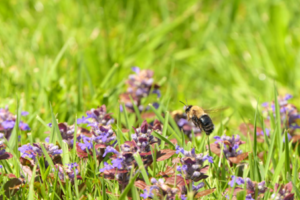
Learning Activity: Creating a Pollinator Friendly Environment
Pollinating insects need food, and will be most visible when they are visiting flowers, but they also need suitable places to shelter and to successfully reproduce.
-
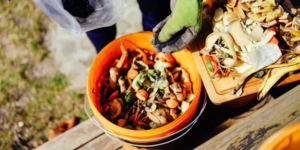
Learning Activity: Bokashi treatment of food waste
Some food waste such as meat, fish, and dairy products should not be composted in most conventional composting systems.
-
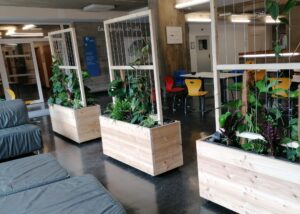
Indoor greening
The planting of indoor spaces is important, as pupils spend most of their school day there. Especially in new school buildings, it is often quite dry due to the well-insulated walls, and children, young people and teachers complain about their mucous membranes drying out.
-

Heat islands
Cities are particularly affected by climate change. Due to the large areas of sealed surfaces and dense building development, cities are more affected by rising temperatures in summer than the surrounding countryside.
-
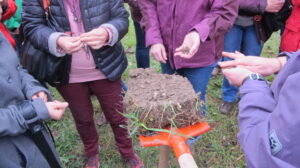
Experiment: Soil analysis
The pupils learn about different types of soil and their composition by means of the finger roll test.
-
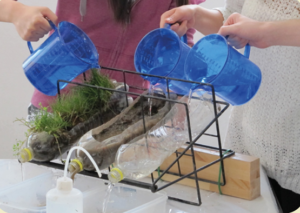
Experiment: Measuring water storage capacity
The experimental set-up is used to simulate a rainfall event on vegetated, open, and sealed ground. In this way, soil erosion and the effect of plants are illustrated. In addition, the different effects of rain on the soil with regards to the degree of sealing and soil vitality are highlighted.
-
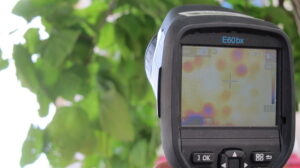
Experiment: Measuring temperatures and surface temperatures
In this practical example, the pupils measure the temperatures at different locations. In this way, they observe at close range what influence materials, green spaces, plants and water have on our microclimate.
-
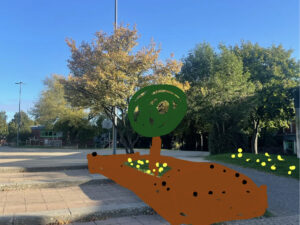
Experiment: Mapping
The pupils document different areas and their uses in the school garden and / or the school area. They discuss the different functions that the soil fulfils in these areas and the uses that take place or could take place.
-
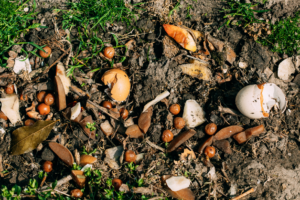
Experiment: How soil is formed
Nature knows no waste. With this experiment, the pupils learn about organic waste as valuable raw materials and basic principles of the circular economy.
-
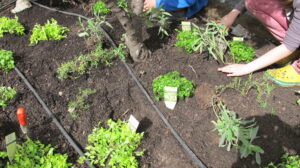
Experiment: Grow your own seedlings
Some plants must be pre-cultivated before they are planted. A practical and cost-saving option is to grow plants from the seeds yourself. This way, in contrast to greenhouse plants, they are immediately adapted to the environmental conditions and are thus more robust.
-
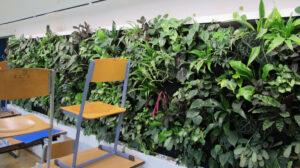
Experiment: Greening your classroom
In this exercise, the classroom is to be greened and enhanced by numerous plants. The plants are chosen together, placed in the class, planted and cared for.
-
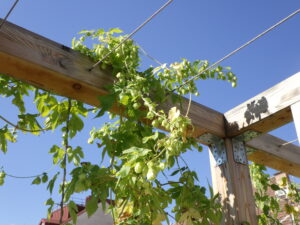
Experiment: Climbing plants@school
With the help of this exercise, the pupils can observe and learn about plant growth and the climbing organs of climbing plants at close quarters. For this purpose, they also grow their own climbing plants.
-
Experiment Station: Transpiration and Evaporative Cooling
Through two different experimental approaches, pupils learn about the phenomenon of transpiration in plants. The cooling effect resulting from transpiration is also covered in the text.
-
Experiment Station: The Photosynthesis
As part of the ‘Photosynthesis’ experiment station, pupils use the inquiry-based learning method to investigate the research question: ‘How does plant photosynthesis affect the composition of the air?’.
-
Experiment Station: Shadow Effect
In this experiment, the pupils measure the effect that ‘green facades’ have on the heating of surfaces (facades).
-
Experiment Station: Green Facades Learning Environment
Using a digital learning environment, pupils explore various green wall systems and plant species. For this activity, plant identification apps or existing green wall models can be used.
-
Experiment Station: Carbon Dioxide as a Greenhouse Gas
In this experiment, the greenhouse effect is first explained in writing. In the experiment that follows, the pupils discover the effect that carbon dioxide has on air temperature (the atmosphere).
-
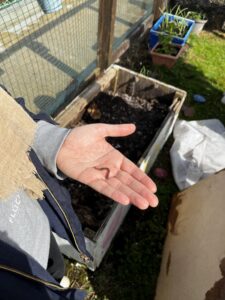
Creating a Wormery
A wormery is an excellent way to turn kitchen scraps and garden waste into rich, nutritious compost.
-
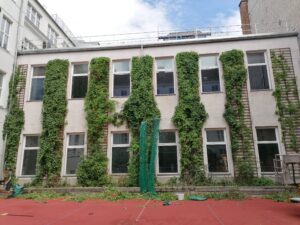
Build your Wooden Trellis
For climbing plants. Get your step-by-step building instruction including plant care & maintenance.
-
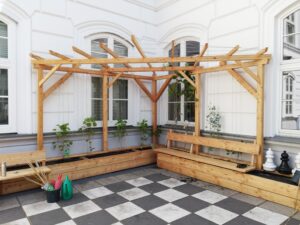
Build your Triangular-Pergola with Bench
Pergola with plant trough and trellis. Get your step-by-step building instruction including plant care & maintenance.
-
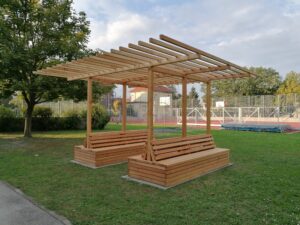
Build your Shadow Double Bench
Wooden construction with bench & trellis. Get your step-by-step building instruction including plant care & maintenance.
-
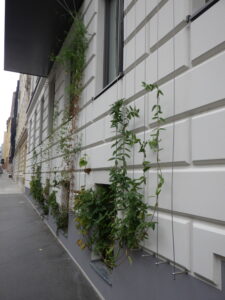
Build your Rope System Trellis
For climbing plants . Get your step-by-step building instruction including plant care & maintenance.
-
Build your Rectangular Pergola
Rectangular Pergola. Get your step-by-step building instruction including plant care & maintenance.
-
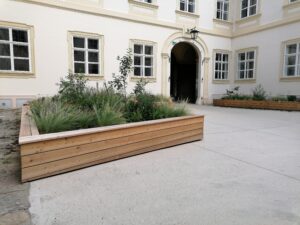
Build your Pop-Up Surface Greening
Planting areas as unsealing measures with seating areas. Get your step-by-step building instruction including plant care & maintenance.
-
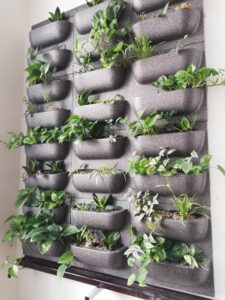
Build your Modular Greening System
Vertical indoor greening: Get your step-by-step building instruction including plant care & maintenance.
-
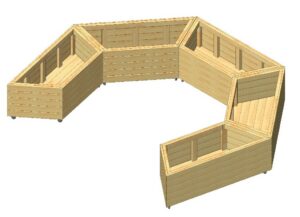
Build your Mobile Trapezoidal Plant Trough
Get your step-by-step building instruction including plant care & maintenance.
-
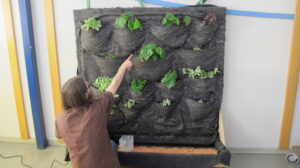
Build your Mobile Green Wall with Fleece Pockets
Get your step-by-step building instruction including plant care & maintenance.
-
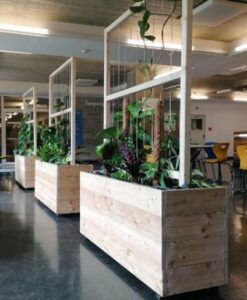
Build your Mobile Green Room Divider
Rollable plant trough with trellis. Get your step-by-step building instruction including plant care & maintenance.
-
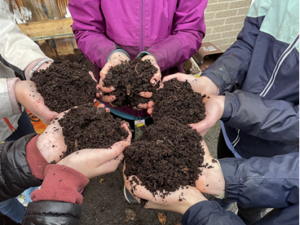
Build your Leaf Mould Composting System
Leaf mould is one of the simplest and most reliable soil improvements you can make at home. It needs no turning, no special equipment, and very little effort.
-
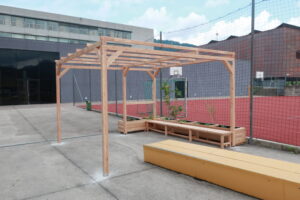
Build your Green Pergola-Class
Get your step-by-step building instruction including plant care & maintenance.
-
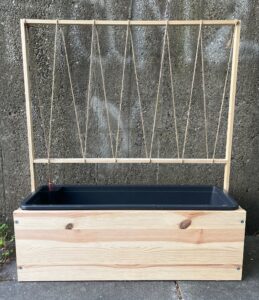
Build your Green Facade Model
Get your step-by-step building instruction including plant care & maintenance.
-
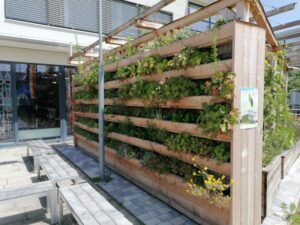
Build your EVAPO+ Green Wall
Evapo-transpiring wooden vertical greening. Get your step-by-step building instruction including plant care & maintenance.