The basics of composting
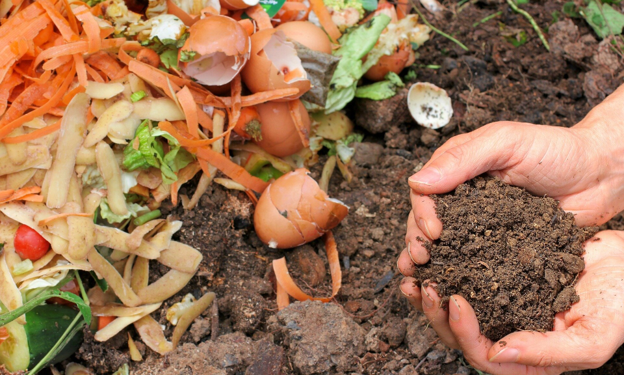
Composting is the conversion of once-living materials from plants and animals into humus or compost. This is stable organic matter that is dark and crumbly, sweet-smelling, and is a good conditioner and fertiliser for soil.
Decomposing organisms do the work: bacteria, fungi, and worms are just a few of the many living creatures that help to make compost.
Conditions for composting need to allow both moisture and oxygen, with a mix of green and brown materials.
Green materials are soft and moist, and include materials such as food waste, fruit and vegetables, green leafy plant matter, and grass cuttings. These provide the moisture and a lot of nutrients to feed the decomposing organisms. If there are too many green materials, the compost pile will be wet, sludgy, and smelly and won’t decompose properly
Brown materials include small twigs, wood chips, sawdust, autumn leaves, paper, cardboard, straw and hay. These materials add bulk and structure to the compost pile to allow air to filter through. If there are too many brown materials or if they are too bulky, the compost pile will decompose very slowly.
Some effective methods of composting different materials:
| Fruit and vegetable waste, tea bags, coffee grounds | (1) Chop materials into small pieces and mix into compost pile with lots of brown materials (2) Chop materials into small pieces and add to a wormery |
| Cooked foods, meat, dairy | (1) Bokashi pre-composting. Bokashi fermented materials can be put in a wormery, buried in a compost pile, or mixed with soil and allowed to decompose aerobically. The process should be enclosed to keep rodents out until the material has composted. (2) Mix food waste with brown materials in a rodent-proof compost bin. |
| Grass cuttings | (1) Practice Grasscycling to reduce amount of cuttings collected. (2) Spread out cuttings on the ground and allow to partially dry. They will lose some moisture and nitrogen, becoming less “green” and more “brown”. Then they can be composted more easily in the compost pile. (3) Spread out cuttings on the ground and mix them with an equal quantity of brown materials. Avoid clumping of wet grass. Add the mixture to the compost pile. Water if necessary. Turn frequently for best results. Keep the pile covered. |
| Mixed garden materials such as weeds, old plants, and cuttings from hedges and trees. | Chop into small pieces and add to compost pile. Turn frequently and water if necessary. Keep the pile covered. |
| Autumn leaves. | (1) Gather leaves in a bag (with air holes) or in a simple wire mesh enclosure. Keep leaves moist and aerated. Leaves will turn to leaf mould in 1-2 years. (2) Use autumn leaves as a brown material to mix with greens such as grass cuttings and food waste for composting. |