Rough compost piles and dead hedging
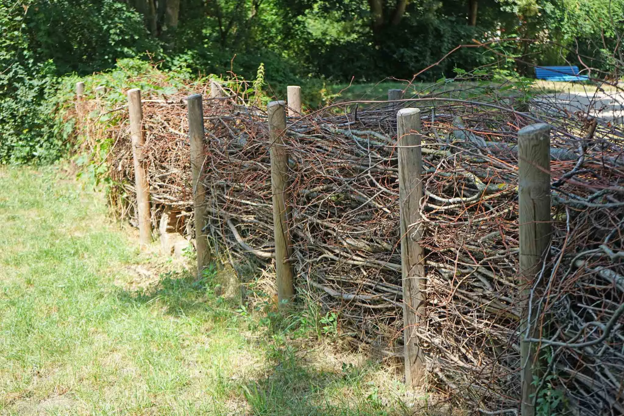
Sometimes you may have large amounts of logs, branches and other bulky woody materials that will not easily compost. In some cases these can be shredded or chopped into smaller pieces but this is not always practical. A useful and often elegant solution can be a rough compost pile or a dead hedge.
Rough Compost Piles
- A rough compost pile is a simple way to manage bulky woody materials. Here’s how to create one:
- Choose a shady spot in your garden or allotment.
- Pile your logs, branches, and woody debris together.
- Squash the pile down to make it compact and sturdy. This helps prevent the materials from drying out and blowing away.
- Over time, the pile will slowly decompose, turning into valuable compost.
While your pile decomposes, it also serves as an important wildlife habitat. It provides shelter for insects, invertebrates, small mammals, reptiles, and amphibians. To support hedgehogs, you can:
- Place a few tiles on bricks to create a dry shelter for hibernation.
- Build the rough compost pile over and around this shelter.
- Alternatively, use a special hedgehog house, which can be bought or made.
Dead Hedging
A dead hedge is a practical and visually attractive method of using woody materials. It can function as a boundary fence, windbreak, or garden feature. To make a dead hedge:
- Place fence posts or sharpened branches into the ground to form an enclosure.
- A typical setup might be two lines of posts 50 cm apart, but adjust based on the amount of material you have.
- Fill the enclosure with your branches and woody debris.
- Longer branches can be woven between the posts to form the structure.
- Shorter branches can be packed in between.
- Squash the materials down as you go to ensure the hedge is compact and strong.
Like rough compost piles, dead hedges are valuable for wildlife. They offer nesting and shelter for birds, invertebrates, reptiles, amphibians, and small mammals. Hedgehogs can also benefit from shelters placed before building the hedge.
As the dead hedge slowly decomposes, it becomes a living habitat for decomposing organisms. Over time, you may also see saprophytic fungi (mushrooms) growing on the rotting wood, adding further ecological value.