Details for review and rating for this initiative at the bottom of this page
The Project
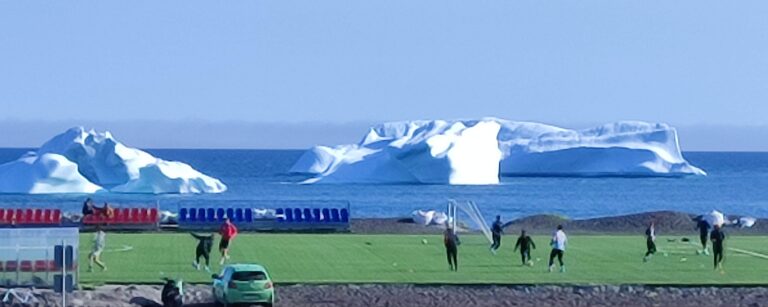
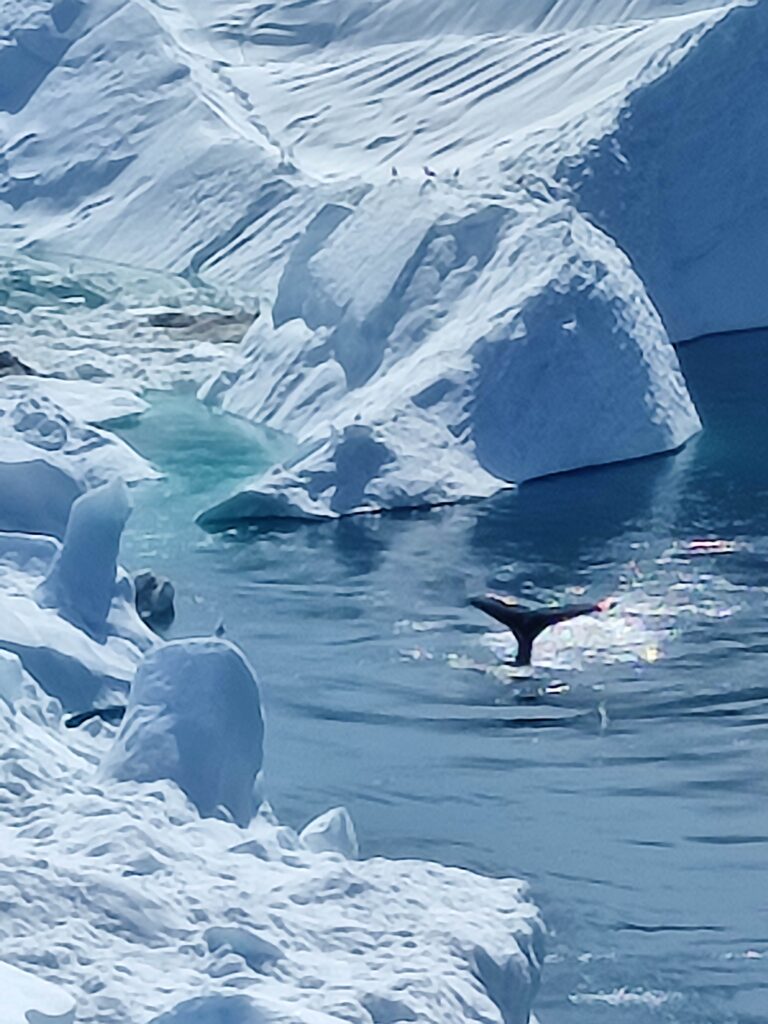
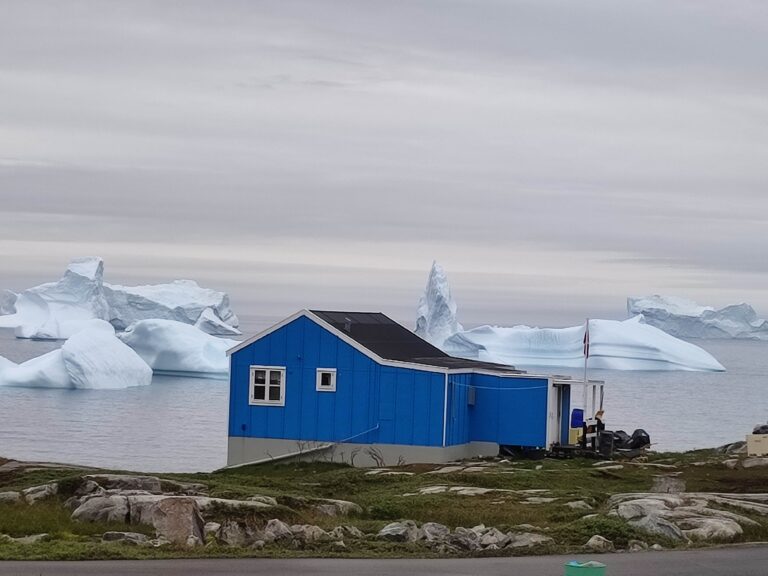
Do you know of any public educational institution in Europe that has carried out an Erasmus+ project focused on educational innovation in Greenland? We have completed two. Greenland plays a crucial role in the fight against climate change; everything that happens there affects us directly, and all our activities have an impact on Greenland’s ecosystem. For this reason, developing educational projects on sustainability in Greenland is both a challenge and an urgent necessity. Our students need to experience this reality firsthand. That is why we first undertook the TOURNET project, led from within the Arctic Circle by our Inuit friends. Given the success and impact of that initiative, we went on to carry out the Erasmus+ KA2 project SMARTOUR, led by a public institution in Nuuk. This second project has had a tremendous impact across Europe.
Do you want to learn Greenlandic? We also have all the materials in Greenlandic available for you.
Greenland plays a crucial role in the fight against climate change; everything that happens there affects us directly, and all our activities have an impact on Greenland’s ecosystem. For this reason, developing educational projects on sustainability in Greenland is both a challenge and an urgent necessity.
Greenland is essential because it acts as the planet's climate regulator and holds the world's second-largest freshwater reserve. Its stability directly affects the oceans, the atmosphere, and global weather patterns.
Talking about climate change in education is essential because it prepares new generations to understand, face, and solve the greatest environmental and social challenge of our time. It is not just about teaching natural sciences, but about shaping citizens capable of adapting to and transforming their environment.
Regarding the environment and the fight against climate change, sustainability was one of the four pillars of smart tourism addressed by the project. Environmental sustainability was systematically integrated into the training curriculum, promoting the responsible management of tourism resources, the reduction of environmental impact, and the long-term resilience of destinations. During the project’s implementation, the partners also adopted greener practices, such as prioritizing online meetings whenever possible, reducing printed materials through digital dissemination, favoring sustainable travel options for transnational meetings, and encouraging environmentally responsible behavior during events. These practices reinforced the project’s educational message through concrete actions.
The SMARTOUR project, like its predecessors, has addressed sustainability in a comprehensive manner, based on four key pillars:
Environmental sustainability: in this regard, the Arctic serves as a globally critical element.
Social sustainability: we have made a significant effort to translate the entire online course into Greenlandic—a language that cannot be handled by automated translation tools—because cultural accessibility is fundamental. We have placed a strong emphasis on accessibility, dedicating an entire module of the online course to physical accessibility; we also invited the president of the Cyclades Association for the Visually Impaired to speak at the ENSEL/SMARTOUR event (which I co-organized) and incorporated her experience into the course materials. Furthermore, we have promoted inclusion and a gender-responsive approach by inviting the Communications Director of the Oceanogràfic Foundation to deliver a lecture at the CIPFPM—as part of the SMARTOUR project—to mark the International Day of Women and Girls in Science. Additionally, we have integrated social sustainability as a core component of the online course.
Economic sustainability: tourism is one of the most significant drivers of global activity, yet it is also one of the sectors with the greatest impact. For this very reason, SMARTOUR has focused on how the digitalization of the sector can contribute to sustainability.
Institutional sustainability: we have collaborated with networks such as ENSA, ENSEL, and ALISAN, as well as representatives from the Council of Europe and authorities from the Generalitat Valenciana (GVA). Moreover, we have produced a final report containing recommendations for institutional stakeholders.
More details
Number of people reached through dissemination activities: The project significantly exceeded its minimum targets, surpassing both the interim goal of 200 people and the final goal of 1,500 people through newsletters, website visits, social media outreach, dissemination events, and third-party presentations.
Number of organizations/entities reached: More than the 150 entities initially targeted were reached, including vocational training centers, adult education providers, tourism associations, NGOs, SMEs, chambers of commerce, and public authorities at the local, regional, and national levels.
Dissemination events organized: Each partner successfully organized dissemination events in their respective country. The consortium exceeded the planned minimum of five events, with an average participation rate that met or surpassed the target of 20–25 participants per event.
The results of WP3 were achieved through a step-by-step, cascading methodology that combines research, co-creation, testing, and quality assurance:
Research on best practices in smart tourism (D3.1)
Led by P1 (Greenland Business School), all partners contributed to identifying and analyzing 2–3 concrete best practices in smart tourism per country. This process ensured a strong European and territorial balance, covering diverse contexts such as small islands, Arctic destinations, Mediterranean regions, and urban tourism settings. The research phase grounded the project in real-world, implementable examples, directly linked to labor market needs and EU policy priorities. https://smartourerasmus.wixsite.com/smartour/general-8 and https://smartourerasmus.wixsite.com/smartour/interactive-map-of-good-practice
Definition and creation of the curriculum and training materials (D3.2)
Coordinated by P4 (Altera Vita), the partnership jointly developed a structured curriculum consisting of seven thematic modules, each led by partners with specific expertise. The materials were designed according to the principles of adult learning and vocational training, incorporating short videos, theoretical content, images, quizzes, and self-assessment activities. This collaborative approach ensured coherence across modules while allowing for specialization and depth. https://e-learning.alteravita.eu/course/index.php?categoryid=32
Compilation of open-access digital and IT tools (D3.3)
Led by P2 (CIPFPM), this activity translated theory into practice by identifying and documenting open-access digital tools that students and tourism operators could realistically use. Clear user manuals were developed, reinforcing the project’s practical orientation and ensuring its applicability for small destinations and micro-operators. https://smartourerasmus.wixsite.com/smartour
The results of WP3, specifically the "Train the Trainers" activity (R3.1), were validated through a dedicated training session. This allowed vocational education and training (VET) teachers and trainers to test the curriculum and tools prior to their online deployment. Feedback gathered during this phase was used to refine the content, structure, and usability.
Participation in cross-dissemination and third-party events:
Project results were presented at a significant number of external events (conferences, seminars, Erasmus+ events, and sector-specific meetings), clearly exceeding the established minimum threshold.
Project website performance: By the end of the project, the website had reached and surpassed its target number of visits, serving as the primary public access point for the project’s results.
The project’s main deliverables are:
R1 – A best-practices report on smart green tourism. This report compiles best practices from all participating countries, as well as other EU nations, on how smart tourism can foster more sustainable, accessible, and socially responsible tourist destinations.
R2 – An online course on smart green tourism: a Massive Open Online Course (MOOC) consisting of 7 training modules, open to anyone interested in participating. Those who complete the course can download a certificate of completion. The course is available in English, Greenlandic, Danish, Montenegrin, Romanian, Greek, and Spanish.
R3 – A collection of open and accessible digital tools for applying the theoretical content of the course. This PDF guide provides practical examples and digital tools to help implement smart tourism initiatives.
R4 – Pilot projects involving vocational students and tourism sector workers, along with capacity-building activities for trainers.
R5 – Policy recommendations, offering guidance for future smart green tourism initiatives and educational programs.
The most important aspect of the project is that we have already certified more than 700 students who have completed our course, awarding them an official micro-credential.
The preparation and organization of dissemination events, as well as cross-dissemination at third-party events, were successfully implemented by all partners. Events were organized at local, regional, national, and European levels, involving educators, students, tourism professionals, public authorities, and civil society organizations. Participation in external conferences and events further expanded the project's visibility beyond the consortium's immediate networks, directly supporting the objective of maximizing impact and transferability. Supporting documents: a record of dissemination activities and attendance lists from national dissemination events.
The project has had a major impact on social media and in some European newspapers. A large final event was held in Valencia, attended by many European officials.
The most important aspect of the project is that we have already certified more than 700 students who have completed our course, awarding them an official micro-credential.
Another aspect we are particularly proud of is the participation of Greenlandic students in the project, especially in the meeting in Nuuk. Furthermore, they have been at the heart of the project, as they are its primary beneficiaries.
The students have also participated in dissemination events—for instance, in a scientific conference on the polar regions, which was presented by a scientist at the CIPFPM.
- Students
- Teachers
- Green Team
Closely linked to this is the continued use of the training curriculum, learning materials, and digital tools, all published as Open Educational Resources (OER). These materials will remain available for free download via the project website and the Erasmus+ Project Results Platform. Partner organizations have committed to integrating the curriculum into their regular vocational training, adult education, and lifelong learning programs, ensuring that future generations of learners and workers continue to benefit from the project’s outcomes.
Another key sustainable outcome is the set of guidelines for small tourism destinations and micro-tourism operators, which will serve as a practical reference for educational providers, tourism associations, and SMEs to implement smart tourism strategies. These guidelines do not require additional funding to remain useful and can be updated or adapted by partners or external stakeholders as needed.
Regarding resources, sustainability is primarily ensured through:
The use of existing institutional staff (teachers, trainers, IT personnel) to deliver courses and maintain materials.
The integration of project outcomes into existing training catalogs, eliminating the need for separate funding.
Continued dissemination through communication channels and networks already established by the partners.
Non-commercial exploitation, in compliance with Erasmus+ rules, ensuring openness and accessibility.
To ensure that project outcomes remain available and widely used, the consortium has adopted several measures:
Publishing all public-facing results as open, multilingual resources.
Hosting materials on stable platforms (the project website and the Erasmus+ Project Results Platform).
Actively promoting the reuse of these resources by vocational training providers, adult education centers, NGOs, and tourism stakeholders.
Encouraging replication and adaptation through clear licensing and user-friendly formats.
The School
- Upper secondary education
If you do not see the stars or if “Select a rating” is not working, please adjust your privacy settings. Scroll to the bottom of the page, click on “Change my settings”, and select “Accept all”.