Bokashi treatment of food waste
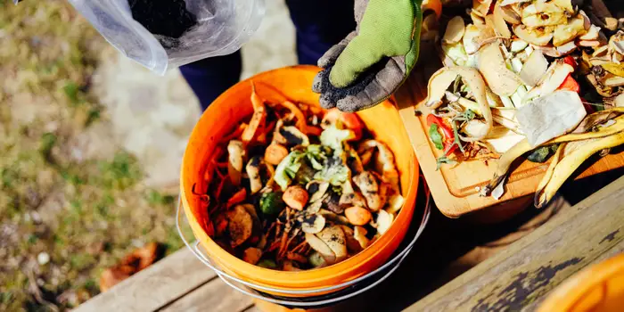
Some food waste such as meat, fish, and dairy products should not be composted in most conventional composting systems. These materials are high in nutrients, and can produce odours and/or attract rodents and other unwanted pests. However, to make this kind of food waste suitable for composting, there is a solution called Bokashi fermentation. This is done using a Bokashi kit.
The kit consists of two or more sealed buckets, usually with drainage taps, and a supply of Bokashi inoculant. The inoculant is usually made of bran from cereal grains, which has been populated with lactobacteria (lactic acid-forming bacteria) and yeast. These organisms work to ferment (pickle) food waste or other suitable organic materials.
Bokashi is used by chopping the food waste into small pieces, placing it in a bucket in layers, and adding a small amount of the bran. The material is pressed down to squeeze out the air, and the lid is kept on the bucket to keep oxygen out. Keep adding food waste and Bokashi bran until the bucket is full, then leave it sealed for a few weeks. Also, open the tap every couple of days to remove any liquid that may be there, and use this liquid (diluted in 10-20 parts of water) to feed plants.
When one bucket is full you can start to fill another bucket in the same way. The bacteria and yeast will ferment (slowly anaerobically digest) the food waste in a way that it does not smell bad. After a few weeks, when the fermentation process is complete, you can empty the contents. The fermented material can then be composted as a green material, mixed with lots of brown materials, in a rodent-proof composting system, or it can be mixed with soil in an aerated rodent-proof container and allowed to decompose.
Lactobacteria are “facultative” organisms, which means that they can operate in both anaerobic and aerobic environments. In anaerobic conditions they create lactic acid, which prevents harmful organisms from growing in the Bokashi bucket. In aerobic conditions, they metabolise using oxygen. The fermented material will compost very quickly as the lactobacteria switch from anaerobic to aerobic conditions, and the result will be rich compost or soil in which the food waste has completely decomposed.