Details for review and rating for this initiative at the bottom of this page
The Project
The project addresses the goals of the 17 Sustainable Development Goals (SDGs) and makes ecological, social, and human rights issues visible, tangible, and experiential through theatre, dance, and performance.
Within the project, students explore issues such as sustainable consumption, climate protection, protection of natural habitats, social justice, human rights, and fair working conditions in an inquiry-based, creative way.
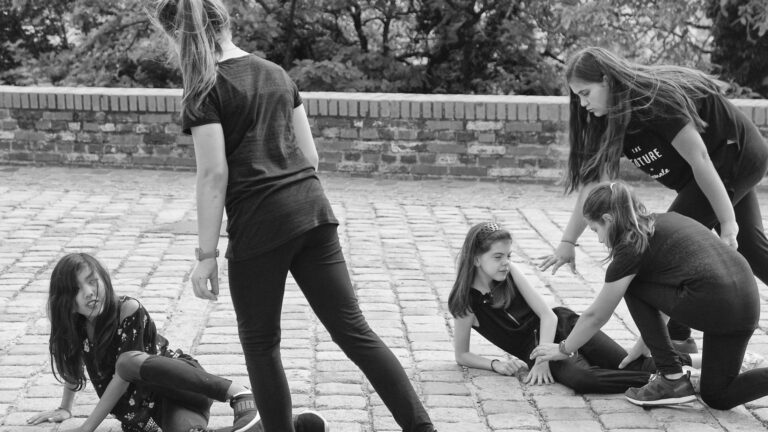
The project is based on creative, and participatory learning. Students conduct research on SDGs, write monologues and dialogues, develop roles and characters, and translate their findings into tableaux, statue theatre, moving sculptures, dance sequences, and performances. Media education plays a central role through the production of a project and promotional film, and public documentation.
Peer learning and peer teaching strengthen collaboration, democratic participation, and self-efficacy.
Project Idea & Pedagogical Approach: The project focuses on life in contemporary society and the responsible treatment of nature, and resources. Through aesthetic and emotional approaches, complex global relationships become understandable and personally meaningful. The goal is to foster environmental awareness, responsibility, and action competence, linking global challenges with students’ own everyday lives. The SDGs serve as a framework for Education for Sustainable Development (ESD) and support sustainable school development in line with the ÖKOLOG and UNESCO school profile.
Project Overview: The project “Beacons of Hope & A Gallery of Human Rights” is an interdisciplinary environmental education initiative that uses artistic and performative methods to explore the United Nations Sustainable Development Goals (SDGs).
In times of global ecological, social, and humanitarian challenges, students are encouraged to develop awareness, responsibility, and the courage to take a stand. Through theatre, dance, performance, language, and media work, complex global issues become visible and emotionally accessible.
Students act as multipliers and beacons of hope, making sustainability, human rights, and environmental responsibility visible in public spaces.
Content-related SDGs
• No Poverty
• Zero Hunger
• Good Health and Well-being
• Responsible Consumption and Production
• Human Rights and Fair Working Conditions
• Social Justice and Equal Opportunities
Environmentally Relevant SDGs
• SDG 12 – Responsible Consumption and Production
• SDG 13 – Climate Action
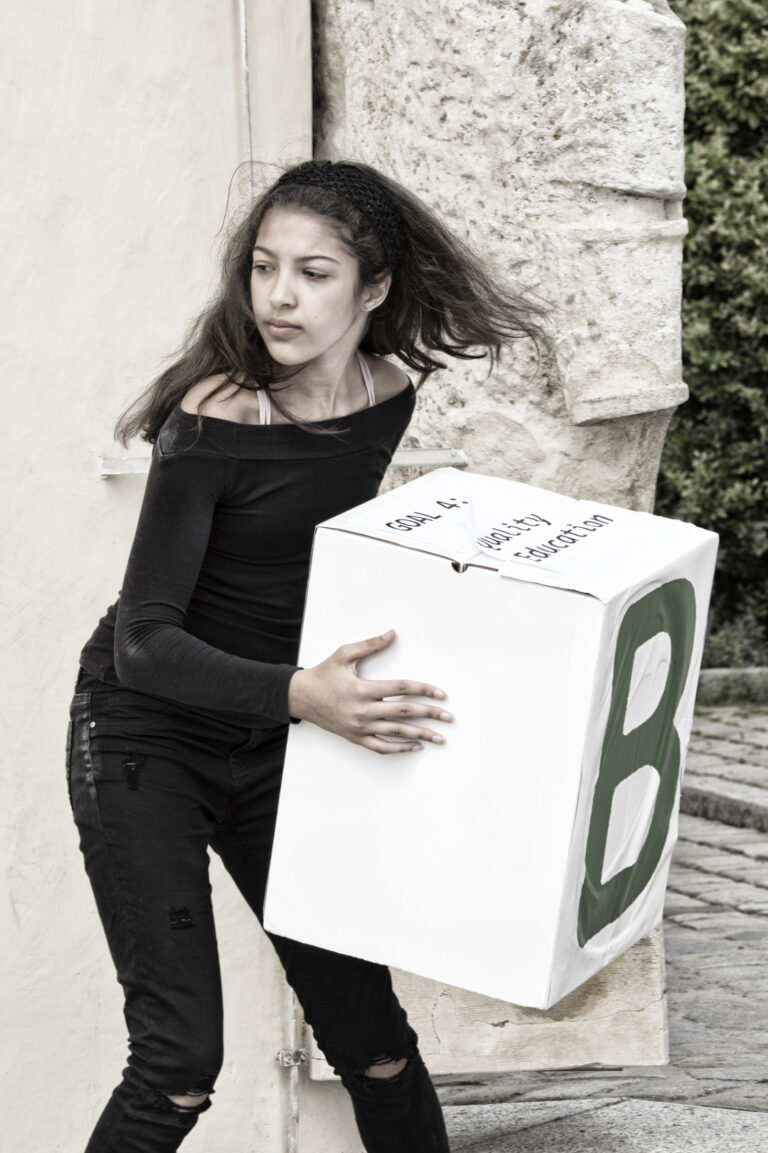
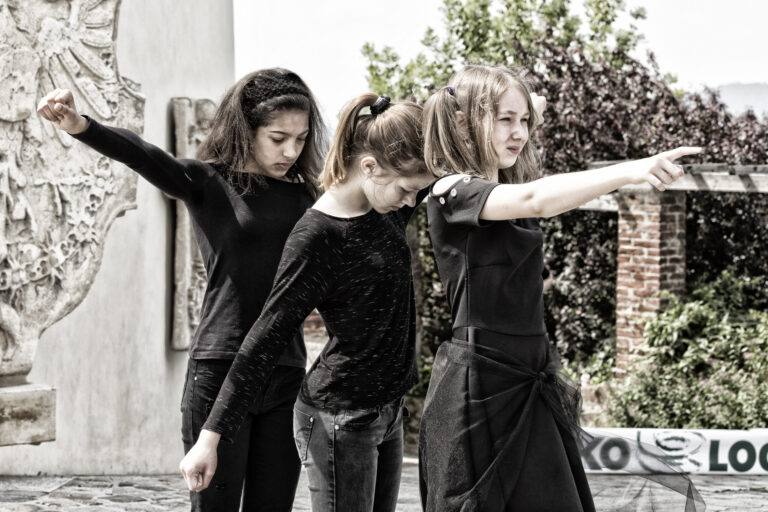
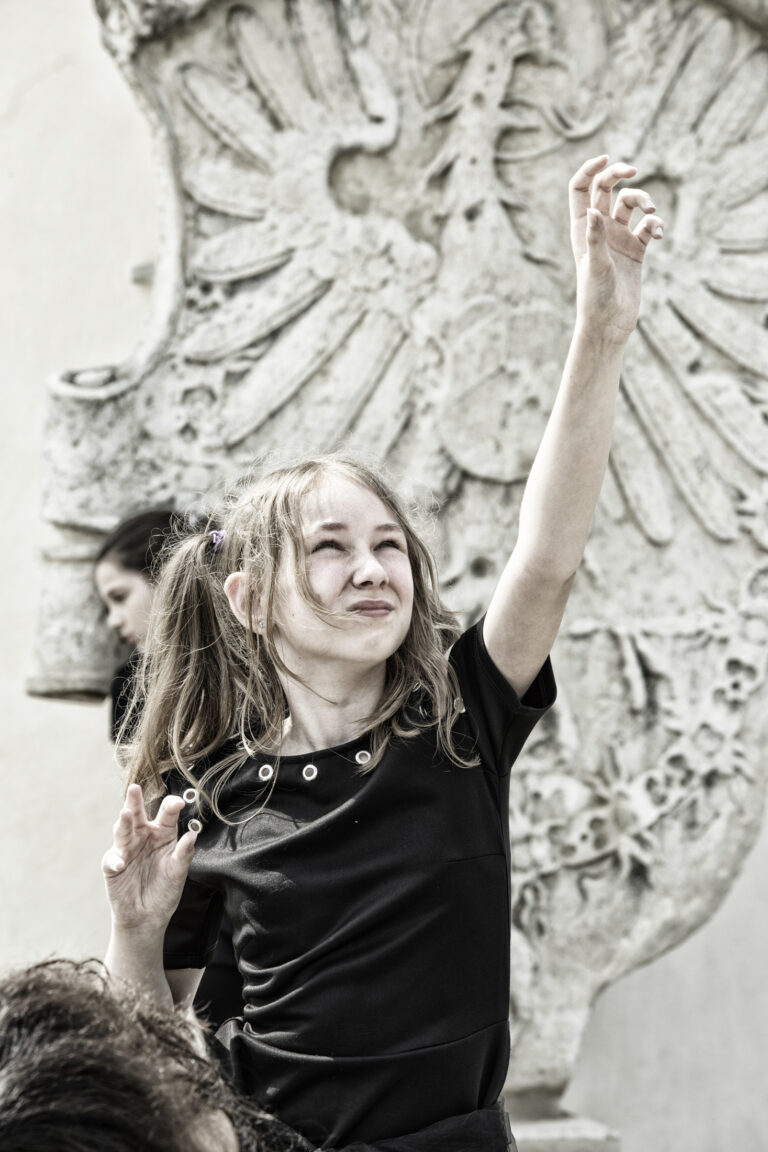
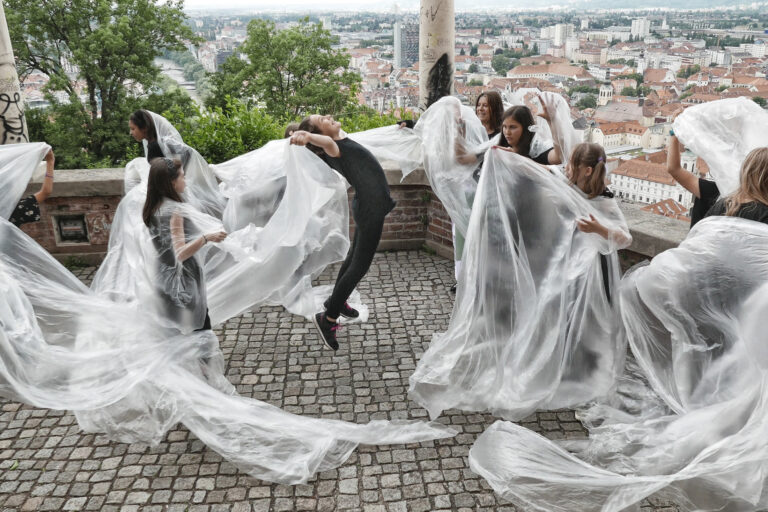
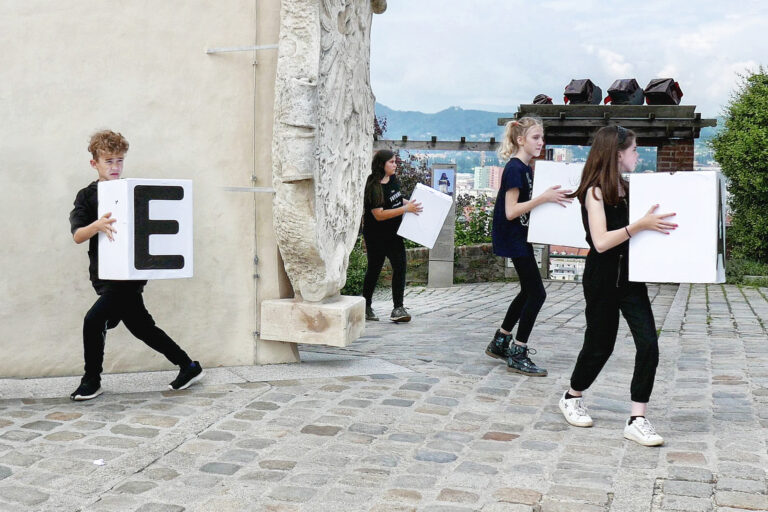
The artistic outcome is a living gallery of human rights and sustainability, presented in public spaces such as the Schlossberg and the Joanneumsviertel in Graz. In these performances, students embody global issues and invite the audience to reflect on the connections between consumer behavior, environmental destruction, and human rights violations. By deliberately placing the performances in public urban spaces, the project brings education beyond the classroom and engages a broad and diverse audience.
The project makes a significant contribution to environmental education, democracy education, and cultural education. It promotes empathy, perspective-taking, and social responsibility, while also fostering creativity, teamwork, and interdisciplinary thinking. Students experience themselves as capable of shaping educational and societal processes, which strengthens motivation and long-term engagement with sustainability issues.
Beacons of Hope & A Gallery of Human Rights also contributes to sustainable school development. The methods, materials, and artistic formats developed during the project are integrated into ongoing teaching and future projects. Environmental and human rights education are thus firmly anchored in the school’s ÖKOLOG and UNESCO profile. The project received very positive feedback from audiences, parents, and media representatives and supports the school’s mission to educate young people as responsible, reflective, and engaged global citizens.
By combining environmental education with artistic expression and public participation, Beacons of Hope demonstrates how schools can act as spaces of transformation and how young people can become beacons of hope for a sustainable and just future.
Concept Development
• Script development
• Production of a film “Beacons of Hope”
• Use of radio, video, and online media
• Public presentations and performances
Project Objectives
• Raising awareness for sustainable development
• Promoting democracy education, human rights education, and environmental competence
• Making inequalities and global interconnections visible
• Strengthening empathy and social learning
Environmental Education Goals
• Training aesthetic perception and sensory experience
• Understanding ecological and social interrelationships
• Promoting empathy, solidarity, and responsibility
• Perspective-taking and emotional engagement
• Developing environmental and action competence
• Encouraging civic engagement
• Conscious use of nature, people, and resources
• Strengthening creativity, teamwork, and self-efficacy
• Developing social and emotional skills
• Interdisciplinary and networked thinking
• Motivation for environmentally and socially responsible action
Methods and Approaches Goal achievement through:
• Artistic forms of expression - theatre, performance, dance, language
• Creation of living sculptures and moving artworks
• Performances in public spaces
• Linguistic and physical representation of complex topics
• Media work (film, radio, public relations)
• Interdisciplinary teaching (English, theatre, movement, media)
Methodological and Didactic Implementation
• Online research on the SDGs
• Critical examination
• Writing monologues and dialogues
• Development of roles, scenes, and tableaux
• Use of statue theatre and moving sculptures
• Dance and movement sequences
• Personal life-world connections (consumption, mobility, nutrition)
• Reflection on personal actions
• Peer learning and peer teaching
• Video and media production
• Artistic implementation through performances, tableaux, and sculptures
Themes are expressed through monologues, dialogues, tableaux, moving sculptures, and dance.
• Performances in public spaces (Schlossberg and Joanneumsviertel Graz)
• Presentations at educational and cultural events
• Media coverage (print, online, radio)
• Project and promotional film
More details
Marktgemeinde Laßnitzhöhe
Impact & Sustainability
• Performances in public spaces
• Long-term awareness through emotional experiences
• Students as active shapers of educational processes
• Sustainable integration of environmental and human rights education into the school profile
Feedback & Awards
Positive feedback from audiences, parents, and media; strong support from parents and the school community
Winning project: “Project Europe”
Mission Statement & School Profile
“With our project, we wanted to draw attention to the importance of nature – sharpening awareness of its diversity in order to preserve valuable ecosystems for future generations.”
Relevance to Environmental Education
The combination of artistic work and environmental education enables a holistic learning process on cognitive, emotional, and social levels. Through tableaux, moving sculptures, dance, and language, global challenges are explored and linked to students’ own lives.
The project promotes environmental awareness through:
• Reflection on personal consumption habits
• Addressing fair labor and resource justice
Methods and Implementation
The project is implemented through interdisciplinary and student-centered approaches:
• Research on SDGs and global interconnections
• Critical reflection on causes and consequences of environmental and social issues
• Writing monologues, dialogues, and text collages
• Development of roles, scenes, tableaux, and moving sculptures
• Use of statue theatre, dance, and movement
• Media work (film, radio, public relations)
• Peer learning and peer teaching
• Public performances in urban spaces
Artistic and Performative Outcomes
The final result is a living gallery of human rights and sustainability, where students embody global issues through movement, language, and visual imagery.
Examples of performed artworks:
• Rainforests – The World’s New Gold
• On a Fairtrade Coffee Farm
• Wrapped in Human Rights
• Everyone Smiles in the Same Language
• Beacons of Hope
• Behind the Fence
These performances explicitly highlight the links between consumer behavior, human rights, and environmental degradation. Students are actively involved in topic research, text production, scenic design, scriptwriting, film production, and public presentations.
Results / Outputs
• Public performance “Beacons of Hope” – a living gallery of artworks
• Promotional and project film
• Media documentation and press coverage
Public Outreach
• Performances in public spaces – Schlossberg Graz
• Presentations at events in the Joanneumsviertel Graz
• Media reports (print and online)
• Project film and video documentation
- Green Team
Long-term integration of environmental education into everyday school life.
The content and methods developed in the project will be used long-term in lessons. Students are encouraged to act reflectively, environmentally consciously, and with social responsibility.
Contribution to Sustainable School Development
The School
- Lower secondary education
If you do not see the stars or if “Select a rating” is not working, please adjust your privacy settings. Scroll to the bottom of the page, click on “Change my settings”, and select “Accept all”.
2 Reviews on “Beacons of Hope & A Gallery of Human Rights”
This is a great educational project that definitely deserves more votes than it has received so far!
great project – don´t stop!