Details for review and rating for this initiative at the bottom of this page
The Project
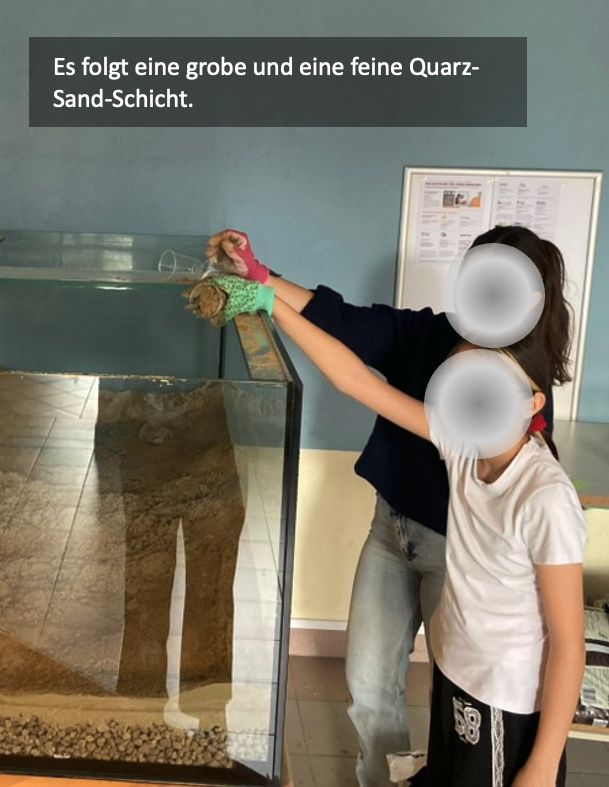
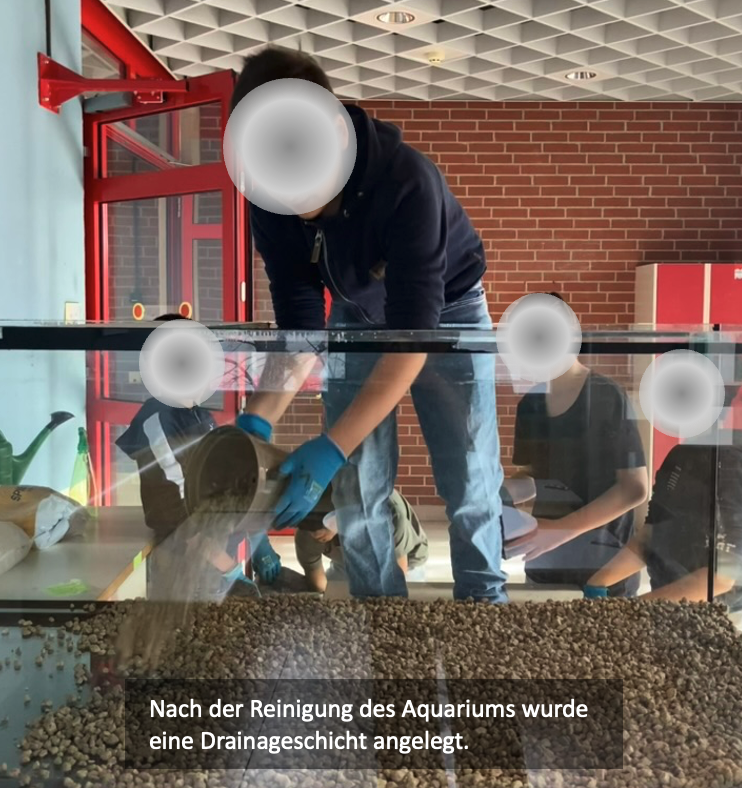
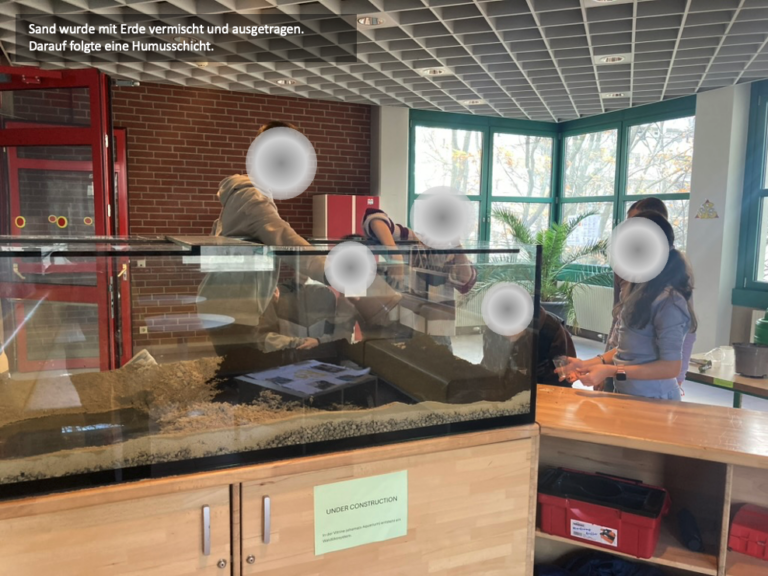
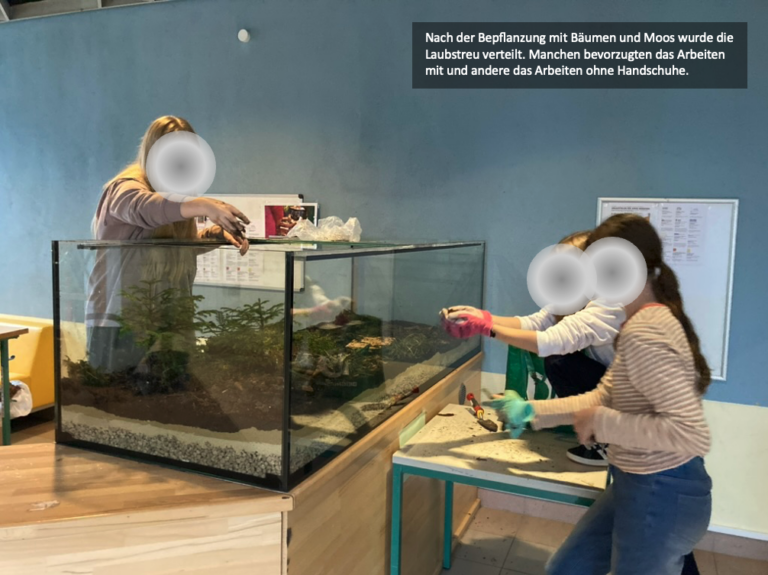
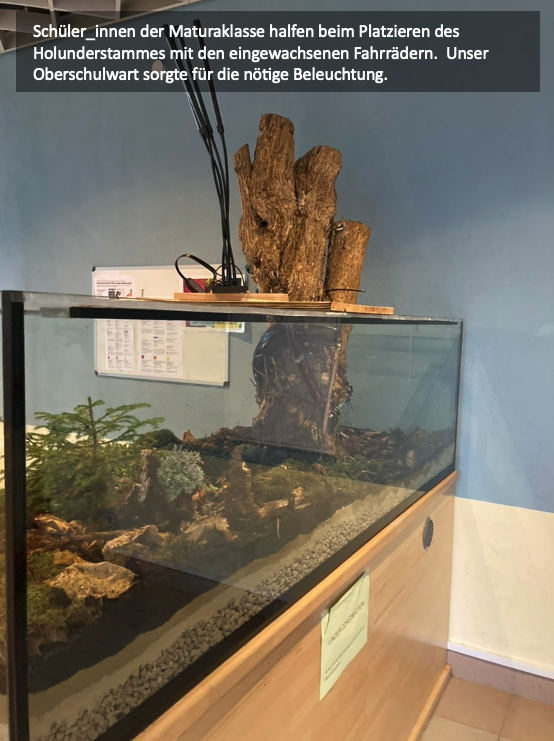
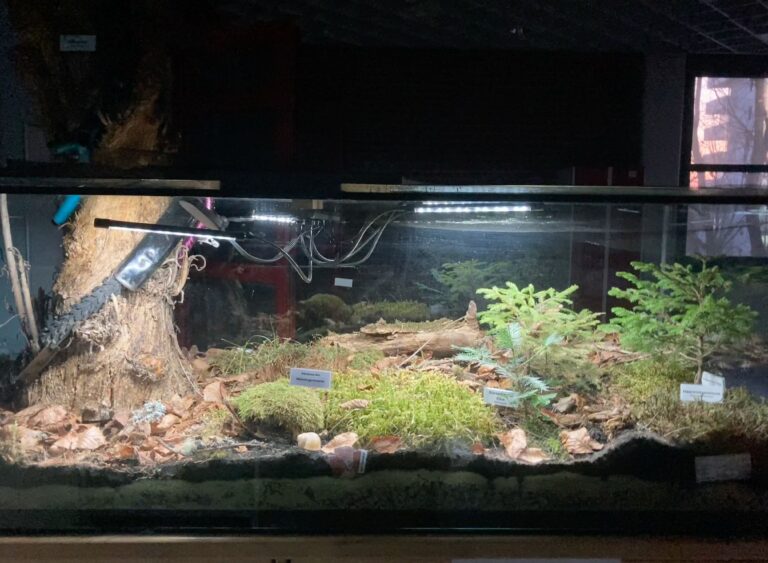
A living forest ecosystem (vivarium) has been recreated. The school’s empty aquarium was reused.
This involved acquiring knowledge about soil structure (Lockergestein, Unterboden, Oberboden, Laubstreu) and the stratification of the forest (Bodenschicht, Krautschicht, Strauchschicht, Baumschicht). Starting in November, this knowledge was applied in practice. In addition, students learned how to apply this knowledge to plant pots to ensure proper drainage and nutrient supply for indoor plants. The vivarium was filled with native trees (Taxus baccata, Picea abies), dead wood, mosses, and lichens. To illustrate the problem of environmental pollution, an aluminum can with an average lifespan of 500 years and a Sambucus nigra tree trunk with two bicycles grown into it are also on display. In spring, wild garlic (Allium ursinum) and snowdrops (Galanthus) will be added to the ecosystem. All plants, the trash and the soil horizon were labeled with information signs. The vivarium is the central feature of the student lounge area on the second floor near the SPS Corner and improves the indoor air quality.
living forest ecosystem, Vivarium, indoor greening, native plants
The vivarium has sustainably enhanced the school environment, making it visibly greener and more lively. Sustainability is not taught as an abstract concept but experienced in a practical way through the upcycling of an aquarium. Hands-on and sustainable learning is promoted through the creation and ongoing care of a long-term ecosystem. The project therefore supports the development of subject-specific, social and personal skills.
The project is designed as a long-term initiative. The creation and equipment of the vivarium, including the installation of information signs, was carried out over a total of 12 lessons (cleaning and preparing the aquarium, adding the drainage layer, subsoil and topsoil, planting and placing deadwood, watering, and installing the information signs and UV lighting). The students take responsibility for regular watering duties. In January, the leaf litter was replenished as it had already partially decomposed. In spring, wild garlic (Allium ursinum) and snowdrops (Galanthus) will be added in accordance with the season.
More details
No external funding.
Material costs were covered by the parents association at the school.
Through the project, hands-on learning was implemented in a clear and everyday way within the school setting. As a key outcome, the vivarium remains permanently as an object for observation and learning, enabling continuous, curriculum-based learning throughout the school year. In addition to developing skills such as cooperation, communication and mutual support, the project also included organisational and practical tasks, such as preparing the workspace, tidying up and disposing of packaging materials in an appropriate way. It is expected that the students will observe and document changes in the vivarium by the end of the school year and gain further insights into ecological relationships.
A total of 56 students (two classes) took part in the project. The vivarium has made the common area more inviting, greener and livelier. Due to its prominent location, many students – not only the 56 directly involved in the project – independently developed questions, showed interest and actively asked teachers for explanations. The vivarium is also used by other classes as an object for observation and learning.
Before the start of the project, the students were informed about the possibility of the participation. The two classes were able to decide for or against taking part through a democratic majority vote. Students’ ideas, such as creating a small stream within the forest ecosystem, were discussed together with regard to their scientific relevance and practical feasibility. During the practical work, the students were able to make independent decisions, for example about the placement of plants, the design of the information signs and whether to work with or without gloves.
- Students
- Teachers
For the first time a vivarium was created at the school. This means that no long-term experience is available yet. Unlike closed vivariums, the glass display case used for this project has an opening at the top. The summer holidays and the empty school building may present a challenge for watering and maintenance. However, the long-term preservation of the vivarium is a key aim of the project.
The School
- Lower secondary education
If you do not see the stars or if “Select a rating” is not working, please adjust your privacy settings. Scroll to the bottom of the page, click on “Change my settings”, and select “Accept all”.
4 Reviews on “Vivarium Ökosystem Wald”
nice experimental approach
Großartig!
Looks interesting
Tolle Idee!