<< Volver a «Buenas prácticas»
Encontrarás los detalles para valorar y opinar sobre esta iniciativa al final de esta página
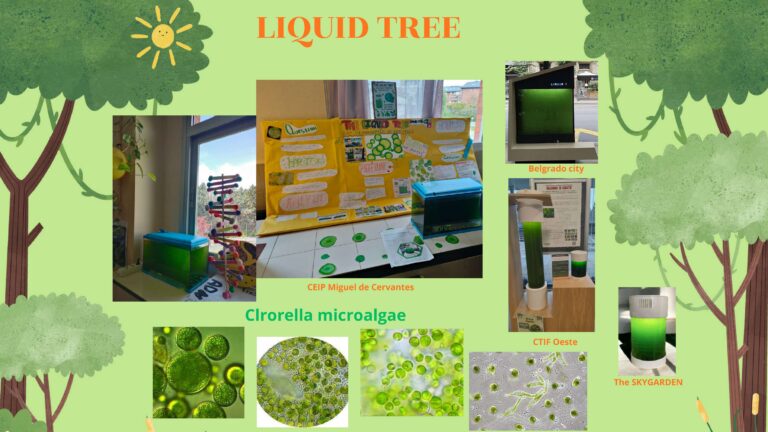
The Project
Students explored an innovative biotechnology solution using microalgae to absorb CO₂ and produce oxygen. The liquid tree helped students understand photosynthesis, gas exchange, and climate solutions. The project connected classroom learning with real-world environmental technology. It increased awareness of how science can contribute to climate action.
The school wanted to explore innovative solutions to climate change and air pollution. The liquid tree was introduced to show how biotechnology can help reduce CO₂. It connects science learning with real-world environmental technology.
• Task 1: Study of the liquid tree and microalgae, focusing on photosynthesis, CO₂ absorption, and oxygen production.
• Task 2: Collaboration with SKYGARDEN and G2G ALGAE SOLUTIONS to implement and analyze this innovative green technology at school.
STEAM and SDG Justification:
• Science: Understanding photosynthesis, gas exchange, and the role of microalgae in environmental balance.
• Technology: Use of biotechnology solutions to address environmental challenges.
• Engineering: Analysis of the liquid tree system as an engineered environmental solution.
• Art: Visual documentation and creative presentations to communicate the project.
• Mathematics: Data collection and basic analysis related to CO₂ absorption and oxygen production.
Impact on SDGs:
• Promotes climate action through CO₂ reduction (SDG 13).
• Encourages innovation for sustainable cities and communities (SDG 11).
• Supports environmental education and awareness (SDG 4).
More details
STEAM Project
Students learned how microalgae absorb CO₂ and produce oxygen. They understood the principles of photosynthesis and gas exchange. The project increased interest in environmental technology.
The initiative strengthened awareness of climate action and sustainable innovation. It showed students that science can provide real solutions. It also improved understanding of biotechnology.
Students researched the liquid tree initiative, which was created to fight severe air pollution in Belgrade, especially in areas where planting trees is not possible.
A team of Serbian scientist developed a biotechnological solution using microalgae to absorb CO₂ and produce oxygen.
The goal was to improve urban air quality through sustainable innovation.
Students studied the system, observed its functioning, and discussed its environmental benefits. They created presentations and visual materials.
- Students
- Teachers
- Green Team
The school plans to continue collaboration with technology partners. The project may expand to include other green technologies.
The School
- Early childhood education
- Primary education
Si no ve las estrellas o si la opción "Seleccionar una calificación" no funciona, ajuste su configuración de privacidad. Desplácese hasta el final de la página, haga clic en "Cambiar mi configuración" y seleccione "Aceptar todo".
96 Reseña en “Liquid Tree in the classroom”
wilfrido monegro
Nice project
Que bonito proyecto
Los alumnos han sido muy creativos con este proyecto para descubrir nuestro ambiente natural.
Gran proyecto STEAM
fantástico felicidades
Me encanta!!
Gracias por acercar la biotecnología a los peques.
Chulisimo
great work! congrats!
Gran proyecto , gracias
genial
gran iniciativa!
maravilloso 😍😍😍
impresionante
amazing! 😱👌
Super cool and interesting!
buen trabajo
No tenía ni idea de todo eso, aprendemos con ellos.
Amazing!
Fantastic!
😍
Gran proyecto para el Colegio, muy interesante.
OMG!
gran proyecto….
Fantástico
Excelente 👌
Estupenda oportunidad de aprendizaje para los estudiantes.
que idea mas chula!!!!! una manera maravillosa para que losmchavales aprwndan de la naturaleza de forma diferente
Great job
Muy interesante
👏🏻👏🏻👏🏻👏🏻
Gran idea para acercar las aplicaciones biotecnológicas a la escuela
Genial
me encanta la idea
súper!
😍😍😍😍
Muy buena iniciativa para entender el proceso de la fotosíntesis y transmitir la importancia del cuidado del medioambiente.
La infancia debe crecer conectada a la naturaleza. ¡Qué bonita propuesta!
Excelente iniciativa
Muy buen proyecto
😁
Muy bueno
Gran idea
Qué buen proyecto!
👌 Muy chulo, excelente trabajo.
felicitaciones por el trabajo realizado 👏🏻👏🏻👏🏻
gran iniciativa!
Gran trabajo, muy interesante
Gran proyecto
Gran trabajo.
Amazing project!!🦠
I love this proposal to improve our air quality.
🥰🥰
😍😍
Genial!!! 👌
👌👌
Un trabajo maravilloso
Genial!!!!
Buenísimo
Excelente idea para luchar contra la polución del aire.
¡Muy bien proyecto! Enhorabuena.
👏🏻
Great
👏🏼👏🏼
super chulo !
🤗
Qué chulada! 👏🏻👏🏻👏🏻👏🏻
☺️
Genial!!
Muy interesante!
love it !
Un gran idea para trabajar con los alumnos.
Good project
Genial
Maravilla de proyecto
🌿🍀✨
Very nice scientific + pedagogical approach!
Would have enjoyed more detailed pictures 🙂
Very interesting!
¡Es una gran idea! Cómo sugerencia para futuros proyectos que puedan enlazarse con este, se están estudiando muchas aplicaciones para las microalgas, algunas de ellas en España como la producción de biodiésel
🌵🫶🏼
Excelente
Enhorabuena al alumnado!! Gracias por trabajar por nuestro mundo!!
I wasn’t familiar with this technology and it’s amazing.
I love this idea!
Actividad orientada a la importancia de la fotosíntesis y a la concienciación del cuidado del ambiente, combatiendo la contaminación.
Una ayuda muy interesante para mejorar el conocimiento de la Naturaleza y nuestra conexión con ella
Great idea!
Excellent project
This is a high-impact, visionary project. It successfully bridges the gap between high-tech climate solutions and daily classroom life. To maximize its value, the maintenance of the «tree» should be integrated into the student curriculum itself.
Buena iniciativa!
Me ha encantado
Gran oportunidad de conocer biotecnología a través del Proyecto STEAM
Gran trabajo con el alumnado que fomenta buscar soluciones a los retos ambientales actuales.
Idea muy original
Great Project!