<< Volver a «Buenas prácticas»
Encontrarás los detalles para valorar y opinar sobre esta iniciativa al final de esta página
The Project
This learning scenario falls within the STEAM framework, which integrates the disciplines of Arts, Science, Mathematics, Technology, and Engineering.
According to National Geographic, the number of insects flying, crawling, or burrowing in certain parts of the world decreases by one or two percentage points each year. This means that the areas experiencing the greatest decline could lose up to a third of their insect populations within two decades, as reported by scientists in the Proceedings of the National Academy of Sciences (PNAS).
This learning scenario aims to raise students’ awareness of this issue, emphasising the vital role of insects in pollination and the importance of protecting them.
GENERAL CHALLENGE: Inurreta (the classroom mascot, which we use to reinforce language skills) has sent us a letter expressing concern. He doesn’t understand where his insect friends, with whom he usually spends time in the school garden, have gone. They have disappeared, and he doesn’t know why. To find out what is happening to them and what we can do to help them return, we will explore the following questions:
· How many insects do we know?
· Where can we go to find insects?
· What can we do to help them return or improve their quality of life?
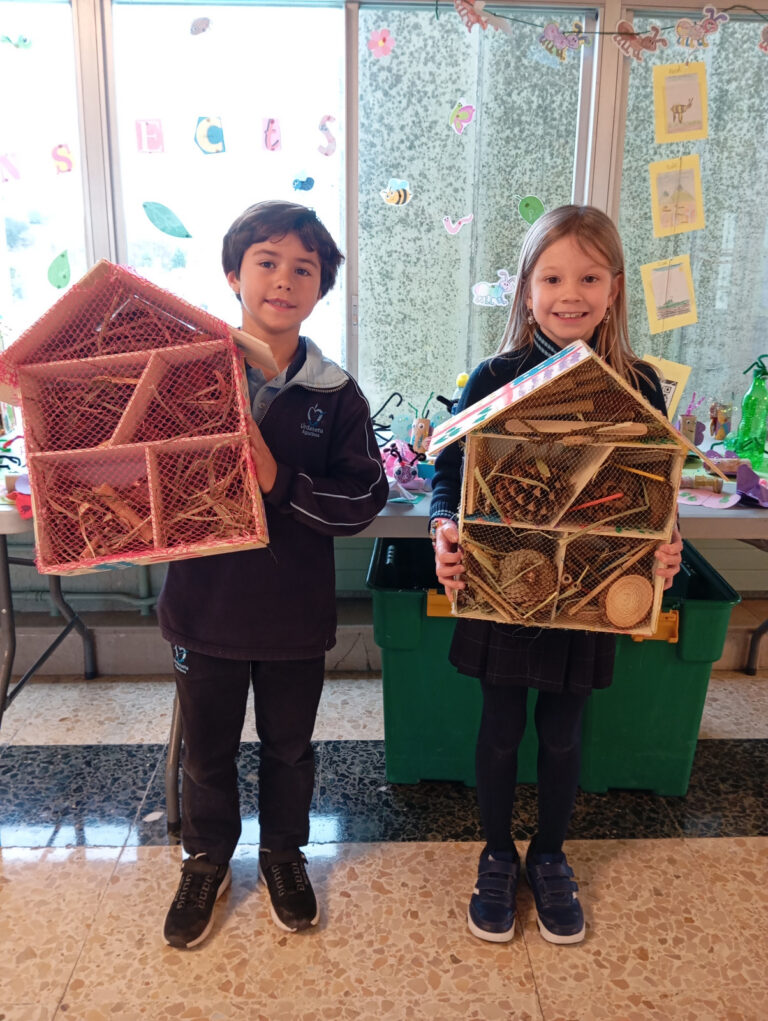
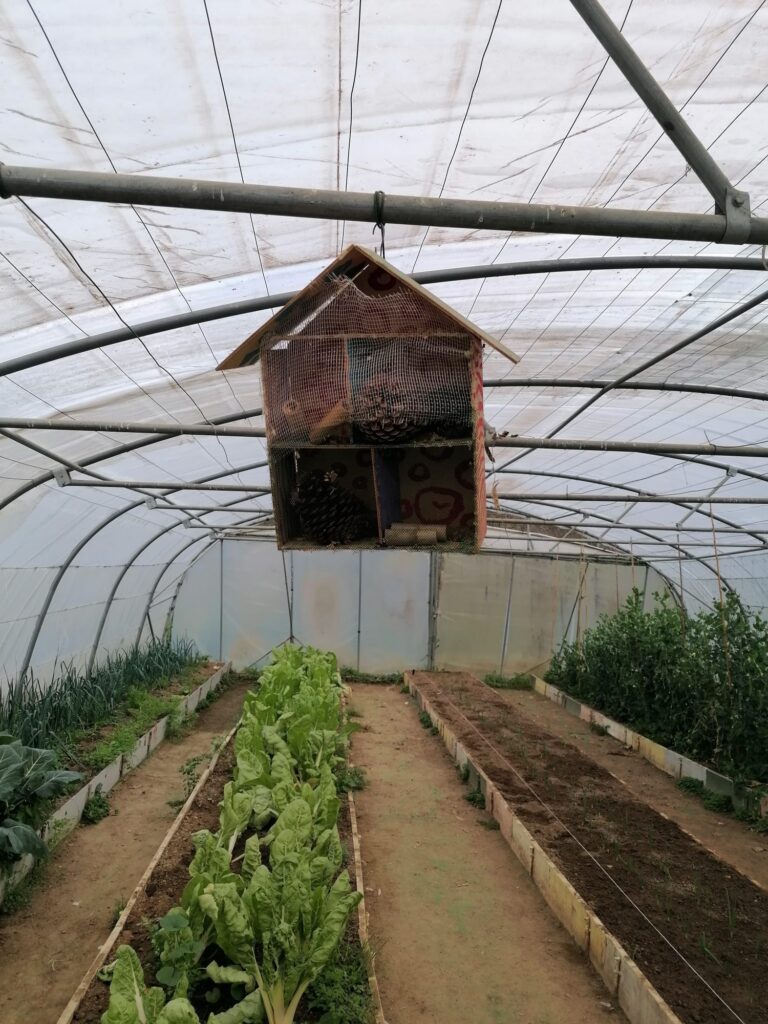
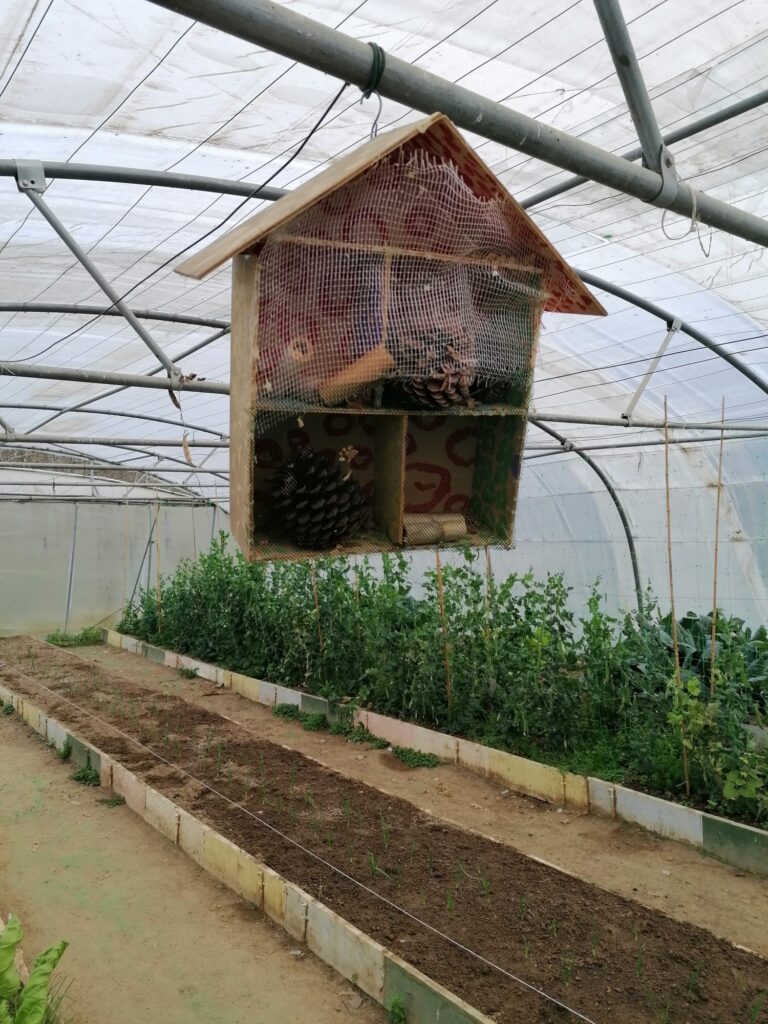
Final Product: The final product that the students will create is an Insect Hotel.
We will pose a central question/challenge that connects with the students, and from there, to answer it, we will unfold the entire curriculum of competences. Starting with the question: “Why are insects important?”, we will begin a learning scaffold that incorporates scientific knowledge, allowing students to carry out experiments to test their hypotheses and deepen their understanding of the insect world.
Activities will include observation, data collection, and analysis. Students will engage with the scientific method to answer the questions posed, taking a journey that enables them to construct knowledge on the topic and ultimately create an insect hotel. This project will integrate scientific understanding with artistic knowledge.
Students will explore new techniques, understand the importance of patterns, and discover the artistic possibilities offered by both two-dimensional and three-dimensional constructions. They will also learn about recycling as an artistic tool and the creative potential of colour.
The primary motivation for this initiative is to raise students’ awareness of the vital role that insects play in our ecosystems and in human life. Insects are essential for processes such as pollination and maintaining biodiversity, yet their populations are declining in many parts of the world. By engaging with this project, students will develop an understanding of the interconnectedness of all living things and the consequences of neglecting insect populations.
Another key motivation is to foster a sense of responsibility and care for the natural world. Through observation, research, and hands-on activities such as creating insect hotels, students will be encouraged to adopt sustainable practices and reflect on how small actions can positively impact the environment.
Furthermore, this initiative aims to stimulate curiosity, creativity, and critical thinking. By exploring the life, behaviours, and ecological functions of insects, students will be motivated to ask questions, test hypotheses, and connect scientific knowledge with practical applications. This holistic approach integrates science, technology, art, and mathematics, reinforcing the value of interdisciplinary learning while instilling respect and appreciation for the natural world.
· Watching informative videos on the life, characteristics, and curiosities of insects
· Reading and analysing stories about insects
· Formulating hypotheses and conducting research using a variety of sources
· Examining real insects with specialised research kits
· Encouraging reflection and drawing reasoned conclusions
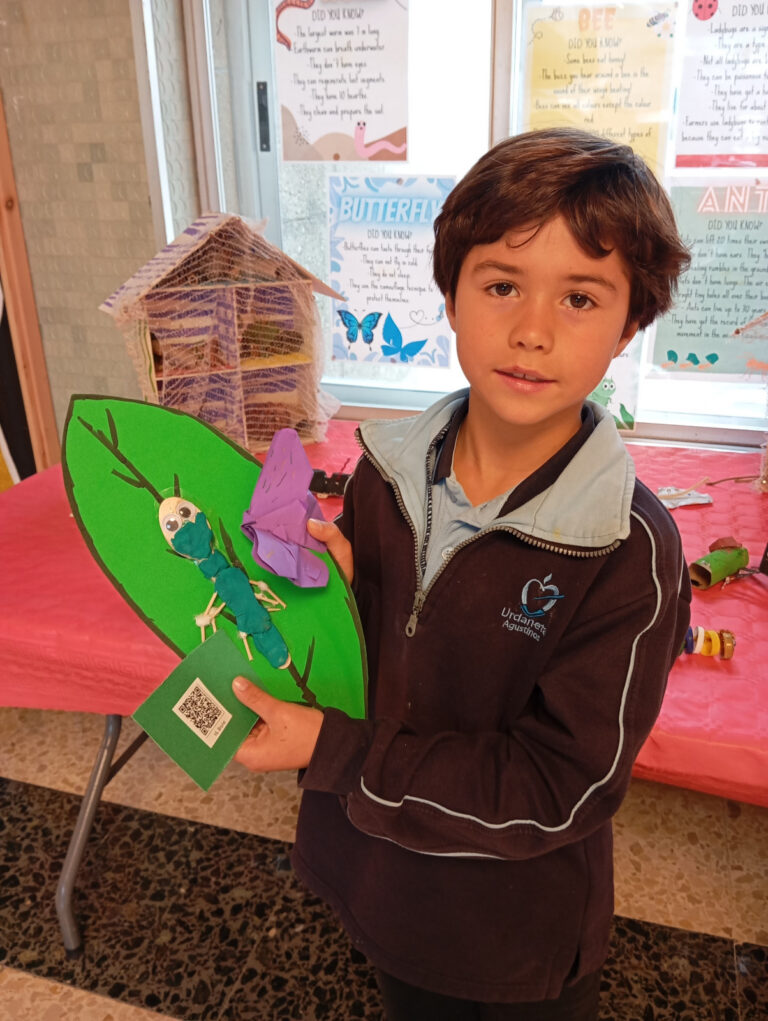
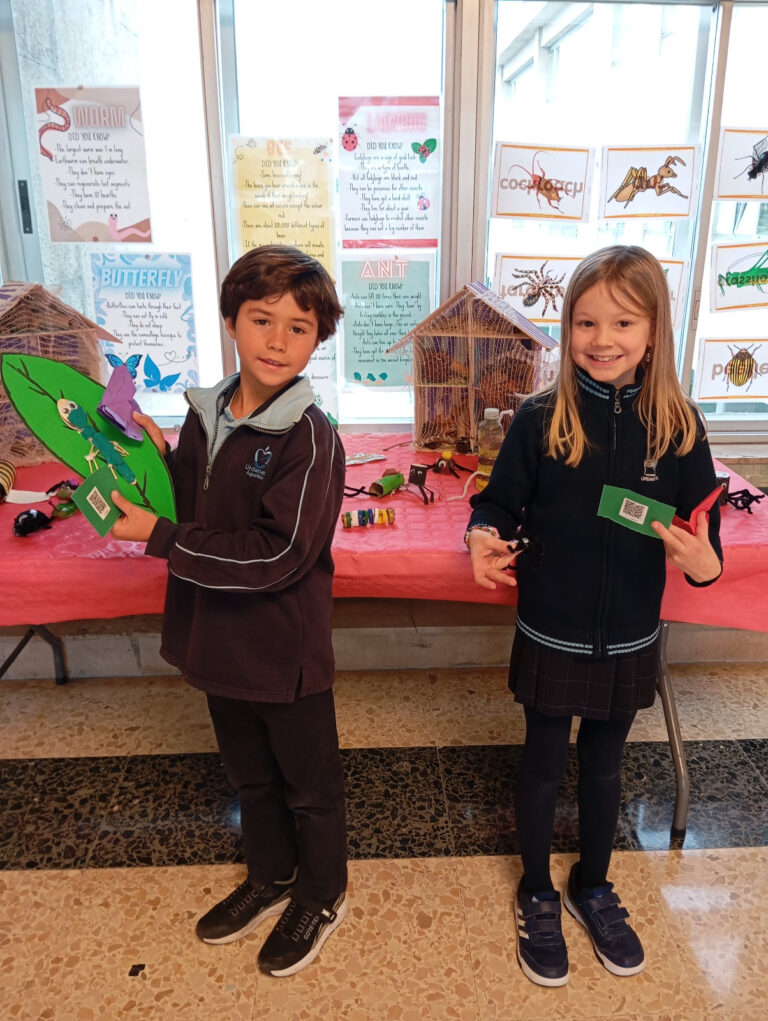
· Producing videos and creating QR codes to present insects
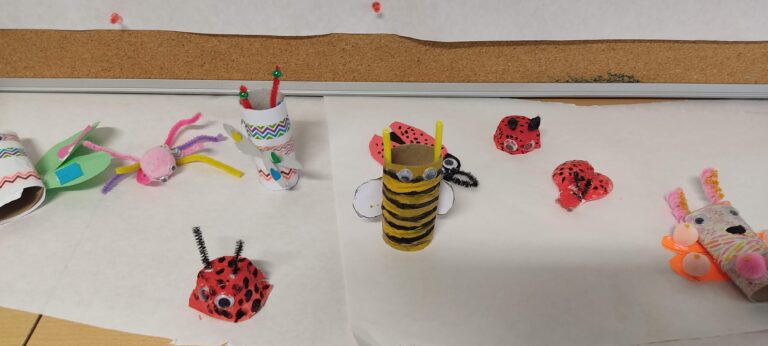
· Designing and constructing 3D insect models using recycled materials
· Drafting sketches for insect hotels
· Building insect hotels using wood
· Investigating patterns in Arts.
· Practising origami techniques: BUTTERFLY.
· Viewing a documentary on the life of entomologist Alice Gray
· Creating mathematical graphs to represent monthly insect population trend
More details
The Project was carried out using scholl resources such as tablets, research kits and free digital tools, Canva. No external funding was required.
Students successfully observed and identified a diverse range of insect species in the school garden, gaining insight into local insect populations and their ecological roles, including pollination. Using research kits and data collection, they tested hypotheses, analysed trends, and represented findings through graphs.
The project also fostered creativity and practical skills: students designed and constructed functional insect hotels, created 3D insect models from recycled materials, and integrated artistic techniques such as pattern design and origami. Additionally, they developed digital literacy by producing informative videos and generating QR codes to present their discoveries.
Through these activities, students demonstrated increased awareness of the importance of insects in ecosystems and expressed a stronger sense of environmental responsibility, showing motivation to adopt sustainable practices and continue observing and caring for insects in their surroundings.
· 132 students involved
· Interdisciplinary work (STEAM, Scinece and Arts)
· Real environmental action in the local environment.
· Increased awareness among students, families and staff
Students’ ideas, interests, and prior knowledge were collected through initial questions, which guided the learning situation. Their questions, hypotheses, research, decisions, and conclusions were actively taken into account throughout the project.
- Students
- Teachers
- Otros
· Expand the Insect Hotel – Build more insect hotels in the school garden to provide homes for insects.
· Observe and Record Insects – Watch insects, count them, and draw simple charts to show findings.
· Plant Flowers for Insects – Grow flowers that attract insects and help them return to the garden
· Continue raising awareness through school exhibitions, social media and educational activities.
The School
- Early childhood education
- Primary education
- Lower secondary education
- Upper secondary education
Si no ve las estrellas o si la opción "Seleccionar una calificación" no funciona, ajuste su configuración de privacidad. Desplácese hasta el final de la página, haga clic en "Cambiar mi configuración" y seleccione "Aceptar todo".
119 Reseña en “INSECTS, ESSENCE OF LIFE?”
Excellent!
Genial
Amazing
Nice project. I love it.
❤️
Gran trabajo!!, Great idea!!
Buen trabajo
Well done!!… 👏🏻👏🏻
Great Job!!!! 😍😍😍😍
Buen trabajo!!
Me encanta!
Excelente!!! Gran trabajo!! Me encanta!!!
Un proyecto muy interesante. ¡Excelente trabajo!
What a great job! Awesome! Doing things well as always!
Very interesting!
Great job, well done!
Me encanta
Excelente!!!
Excelente
Maravilla
Super project!
Wow! Gret job! 👏🏽
Fantastic project!
Incredible
Liluragarria
excelente
good job
I love it!
Me encanta
Good job!
Wow 😍
Great idea!
Super!!
Good job
Love it!
I like it a lot!!!😄
Goog job
Excellent job guys!
Nice Job
Excellent initiative to introduce the students on the relevante of insects in our ecosystem. LOVE It!
I love ir
👏👏👏
Great Job!!!
Top!
Amazing 🤩🤩🤩🤩
súper bien!!!
Great project !
Amazing!
A great job!!!
Great
Great!!
Great work!
A very interesting project!!
🤩🤩
insects
great idea
Insects!
¡¡Que maravilla!!
Good job
Great job!!!!
Amazing project thanks for sharing!
amazing!
💚
❤️❤️❤️
Great idea, fantastic work for the kids at this age and even for adults!
Marvellous!
Well done kids!
Love it!!!!
A seguir así
GOOD JOB!!
Good job, congratulations!!
Great😊
super!
Amazing!
well done
Very interesting project!!!
Well done!!! Nice project
Great Job!! Well done
Congratulations
💛
Good Job
Well done!
👏🏻👏🏻👏🏻
👏🏽👏🏽👏🏽
great job
Great job! Excellent!
I love it
Really nice!!
Muy buen proyecto, gran trabajo!!
Excellent job!
Fantastic and interesting!
Good job!
Impresive
Great job!!!
Good job!!
Like it!
¡Buen trabajo!
Súper interesante, bien planteado y ejecutado.
Great work!
Good job!!
Me encanta. Preciosa iniciativa
Gran trabajo chicos!!!
🥰
Precioso!!!
A great project developed by young people, good effort done to explain us the insects world.
Thank you!
Love it!!
It is essential to learn the importance and the role of these organisms in the Nature to protect them
Great idea
Nice!
Estupendo trabajo chicos!
Amazing!
Amazing!
Great!
❤️❤️
Great udea
Good
I love it
Great Idea!